Absorbents For Less Blog

Absorbents for Fleet Maintenance: Controlling Oil, Fuel, and Coolant Leaks
Every fleet bay leaks oil, fuel, and coolant. Here's which absorbent handles each fluid, where to stage it, and how to keep a slick floor from turning into a claim.
read more...
Storm drain protection: what to have on hand before the next spill
A buyer's guide to staying spill-ready at every storm drain, before an incident forces the question.
read more...
Stopping Spills Before They Start: Secondary Containment for Drums and Machinery
A pad swapped every week for years never fixed the leak. Here is how drip pans, trays, and berms stop the spill before it starts, and where absorbent still fits.
read more...
Spill Kits by Type: Which Kit for Oil, Chemical, or Universal Spills
Not every spill kit is built for every spill. Here is how to match oil, chemical, and universal kits to the actual liquids on site before a spill forces the decision.
read more...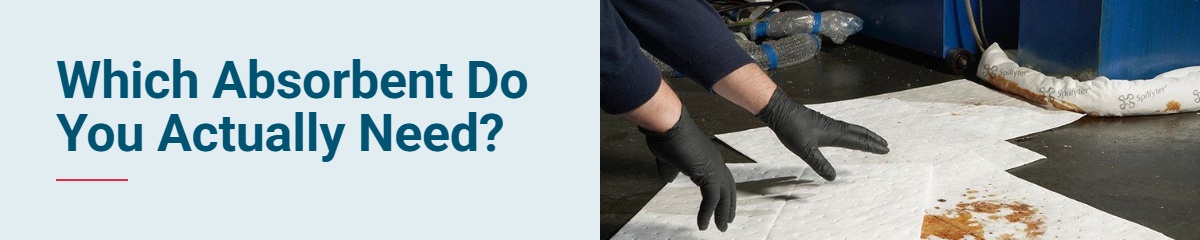
Which Absorbent Do You Actually Need? Pads vs. Socks vs. Booms
Pads, socks, and booms are not interchangeable, and grabbing the wrong one during a real spill costs more absorbent and more time. Here is how to match the format and chemical grade to what actually hits the floor.
read more...
Storm Season Spill Kit Checklist: What to Stock Before the Water Rises
When a storm is 48 hours out, freight stops and lead times stop mattering. Here is the spill inventory to stage now, by type, before the water rises.
read more...
Boat Show Season Is Here: Why Every New Owner Needs Marine Absorbents
Boat show season runs from late summer into spring, and every new owner needs spill protection for two places at once: the deck and the water.
read more...
Same Pad, Same Spill, Less Money: Before You Reorder Absorbent Pads
Absorbent spend is one of the least audited lines in a facility budget. Run the math on cost per gallon absorbed instead of cost per pad, and it stops being small.
read more...
Your Spill Kit Is a Permit Line Item Now. Here Is What the 2026 Stormwater Cycle Actually Asks For.
EPA's 2026 Multi-Sector General Permit took effect June 1. Under it, absorbents are a documented control, and a missing one is a finding. Here is what an inspector looks at, and how to be ready for the inspection, not just the incident.
read more...
Fiscal Year-End Spill Restock: Spend the Budget Before September 30
Expiring FY2026 dollars plus a consumable every facility already burns through equals a clean fiscal year-end buy. Here is how to restock spill supplies before the deadline.
read more...
PFAS Just Changed the Rules for Facility Spill Response. Here Is What Actually Changes.
PFAS rules are tightening in some places and loosening in others. Here is what the shift actually means for facility spill response, disposal, and documentation, in plain terms.
read more...
Your 2015 Spill Response Plan Might Be Illegal Now.
The 2024 EPA Facility Response Plan rule pulled roughly 5,400 new facilities into scope. Storm season is when a plan written under the old regime gets tested. Here is what to verify before the next named storm.
read more...